
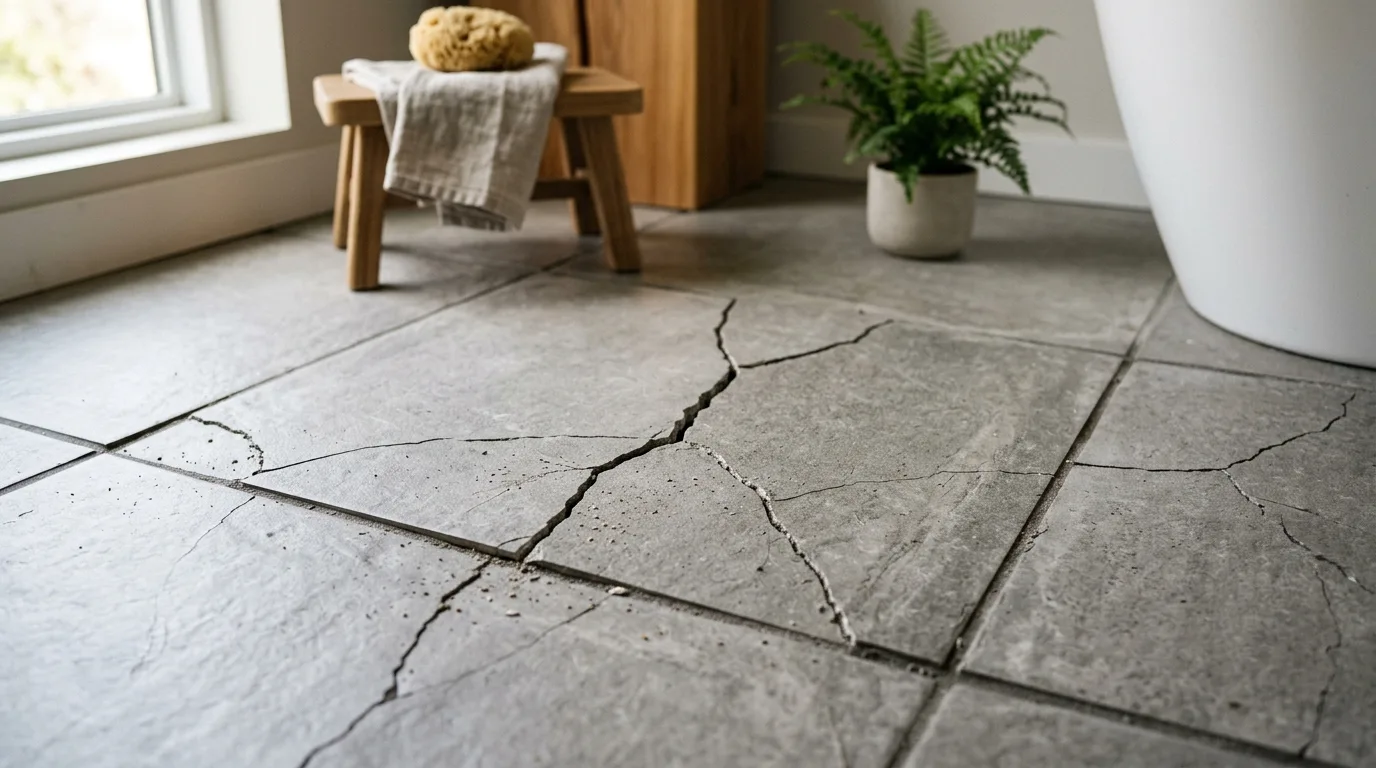
Homeowners who buy quality floor tiles want them to last for many years. But they may find cracks in their tiles within only two or three years after installation. Low-quality tiles are usually cited as the reason. But the reasons for cracked tiles after two years cannot be attributed solely to the quality of the tiles. In most cases, why your tiles crack after 2 years is more to do with installation, movement of the subfloor, water and expansion problems.
As there are large changes in seasons’ temperatures and many construction projects in Punjab, it is very important to know the scientific reason of cracking of tiles which could save money on costly renovation work for house owners. If you want to construct your own house or renovate it, then it will be helpful for you.
Tile Cracking in India: Key Statistics
Indian ceramic tiles market is set to grow at an incredible pace owing to residential constructions and renovations. As per estimates by the India Brand Equity Foundation (IBEF), the Indian real estate market will touch the US$ 1 trillion mark by 2030.
The installation quality becomes just as important as the material itself when the construction grows. This makes proper tyle laying important for long term durability.
Source: IBEF – Real Estate Industry in India
The Science Behind Tile Cracks
The tiles, however, have high compressive strength; they are not flexible. In case the forces below and around the tiles become too strong, cracking starts to happen.
Some common scientific causes include:
- Structure movement
- Thermal movement
- Moisture movement
- Adhesive failure
- Load transfer problems
- Floor movement
Factors like these mostly take months or years to become visible. This is why the cracks appear after about two years and not right after installation.
Why Your Tiles Crack After 2 Years: Understanding the Hidden Causes
It is often perceived by homeowners that cracked tiles mean they bought low quality tiles. What professional architects and interior designers know is that the technology of installing the tiles is far more important than the brand of the tile.
Here are some of the most common causes.
Improper Subfloor Preparation
The strength of the tile depends on the quality of its sub-base.
If the sub-base is not:
- Properly cured
- Completely level
- Free of dust
- Structurally stable
Then the glue will not be able to form a good bond.
Absence of Expansion Joints
All structures expand and contract.
In Punjab there is:
- Hot summer
- Cold winter
- Large daily temperature fluctuations
This movement is caused by temperature fluctuations in both concrete and tiles. If the expansion joints are not installed, then there will be a buildup of pressure and the tiles will break. It is essential that professional installation of flooring should have expansion joints.
Low-Quality Tile Adhesive
Most contractors still employ the old fashioned method of cement mortar for installing tiles.
Modern large sized vitrified tiles need:
- Polymer modified adhesive
- Flexible bonding agents
- Curing time
Poor quality mortar fails to bond well over time, leading to hollow areas underneath the tiles. Ultimately, constant walking causes visible cracks.
Formation of Settlements
Any structure undergoes some form of settlement in the initial years of construction. These settlements are normally harmless to structures.
But when:
- there is an irregular settlement of the foundation,
- the beams have small movements,
- there is deflection of slabs,
then tiles will be the first signs of trouble because they are rigid materials.
Hollow Tiles
If you knock the floor and notice a hollow sound coming from under the tile, there could be hollow spaces underneath the tile.
The reason behind this is due to:
- inadequate adhesive application
- incorrect placement of tiles
- lack of adequate adhesive application
These hollow spots become cracked under load concentration in the long run.
Heavy Furniture without Adequate Support
Heavy items like wardrobes, countertops, safes, and pianos apply pressure on a small spot. In case of lack of sufficient support below the floor surface, these loads will weaken the tile eventually.
Moisture Issues
The issue of moisture is often not considered when talking about failed tiles.
Moisture coming through:
- bathrooms
- balconies
- kitchens
- plumbing leaks
is able to weaken adhesives and may result in some floor expansion. Consequently, this leads to stress being placed on the tiles.
Improper Tile Choice
All tiles cannot be used for all purposes.
Some examples are:
- Wall tiles applied to floors
- Interior tiles applied in an exterior setting
- Decorative glossy tiles used in garages
- These tiles have different levels of strength.
Using the wrong tile will increase the chance of cracking.
Incorrect Grouting Practices
Grouting is more than just decoration. Grout distributes movement between adjacent tiles.
Examples of faulty grouting practices are:
- using insufficiently mixed grout
- not creating grout joints
- inadequate curing
- use of inappropriate grout in damp locations
Faulty grouting leads to extra movement which eventually destroys other tiles.
Structural Design Problems
Occasionally, cracked tiles signal bigger structural problems.
Some examples are:
- deflection of the slab
- insufficient reinforcing
- excessive vibrations
- movement in foundations
A skilled architect examines floor structure and behavior before suggesting fixes.
Why Tile Cracking Is Common in Punjab Homes
The environmental conditions of Punjab and construction techniques present some special difficulties related to tiling in floors.
There are several reasons for this including:
- High temperature in summers above 40°C
- Temperature variations in winters
- Urban housing developments
- Big-sized vitrified tiles fad
- Hefty marble & granite furniture
- Moisture in monsoons
Good architectural planning can avoid most of these problems in advance.
What Are The Signs That Your Tiles May Crack Soon?
You can seriously avoid having to get your expensive flooring replaced through early detection.
Watch for:
- Hollow sounds when you walk
- Hairline cracks in grout
- Loose tiles
- Uneven edges of the tiles
- Even minor lifting of the tiles
- Repeated grout failure
- Water seepage near any tiled areas
The problems can get worse if you ignore these warning signs.
How Professional Architects Prevent Tile Failure
Architectural companies that have experience will not just select good-looking floorings but will design an entire system for it.
It includes:
- Structural loading
- Slab design
- Joint design
- Water control
- Specification of adhesives
- Laying of tiles
- Installation of tiles
All these precautions help in avoiding flooring problems.
Choosing the Right Flooring for Punjab Homes
When you’re choosing tiles, remember to consider things more than just appearance:
Look for:
- PEI wear rating
- Water absorption percentage
- Slip resistance
- Thickness
- Breaking strength
- Flexural strength
- Manufacturer warranty
Professional guidance can help you as aesthetics and durability go hand in hand.
Why Hiring an Experienced Architect Matters
Many flooring problems come long before the first tile is installed.
An experienced architect coordinates:
- structural engineers
- civil contractors
- flooring installers
- waterproofing experts
- interior designers
This integrated approach helps you ensure that every layer is made for long term performance. This goes from the foundation to the finished tile.
At Design De Maison, every residential project is actually planned with a strong focus on structural integrity, premium materials and construction quality. The team helps you select flooring materials from supervising installation standards. We help you avoid costly issues that come our years after the project completion.
Conclusion
Understanding why your tiles crack after 2 years must go beyond just the tiles themselves. Issues like structure shifting, improper installation, water damage, bad glue and thermal expansion are responsible for this. The residents of Punjab need to avoid all these factors with careful planning and the help of professional architects who will ensure that everything from the materials to the installation process is of high standard.
Frequently Asked Questions
Q – Why do floor tiles crack after only two years?
A – The usual causes for tile cracking are poor subfloor preparation, building settling, bad adhesive, moisture-related problems, or no expansion joints – and not the tiles themselves.
Q – Does having cracked tiles mean there is a structural problem?
A – No, it is not necessary. Though sometimes the cracks may be due to installation problems, there could be larger structural problems in the slab or foundation if cracks keep recurring.
Q – Are cracked tiles a sign of structural problems?
A – No. Although there are instances where cracks form due to the manner in which the tiles were installed, cracks in large numbers may be indicative of slab movement or other structural issues that require inspection by an architect.
Q – Can temperature changes in Punjab cause tile cracks?
A – Yes. The temperature variations in Punjab can lead to the expansion and contraction of tiles as well as concrete slabs because of the lack of properly designed expansion joints.
Q – How do I keep my tiles from cracking in my new house?
A – Use good quality tiles, apply proper adhesives, do proper subfloor preparation, provide expansion gaps, ensure proper waterproofing, and work with experienced architects and tile layers.
 Home
Home Portfolio
 Call Us
 Whatsapp
 Contact Us
 Call Us
 Whatsapp