
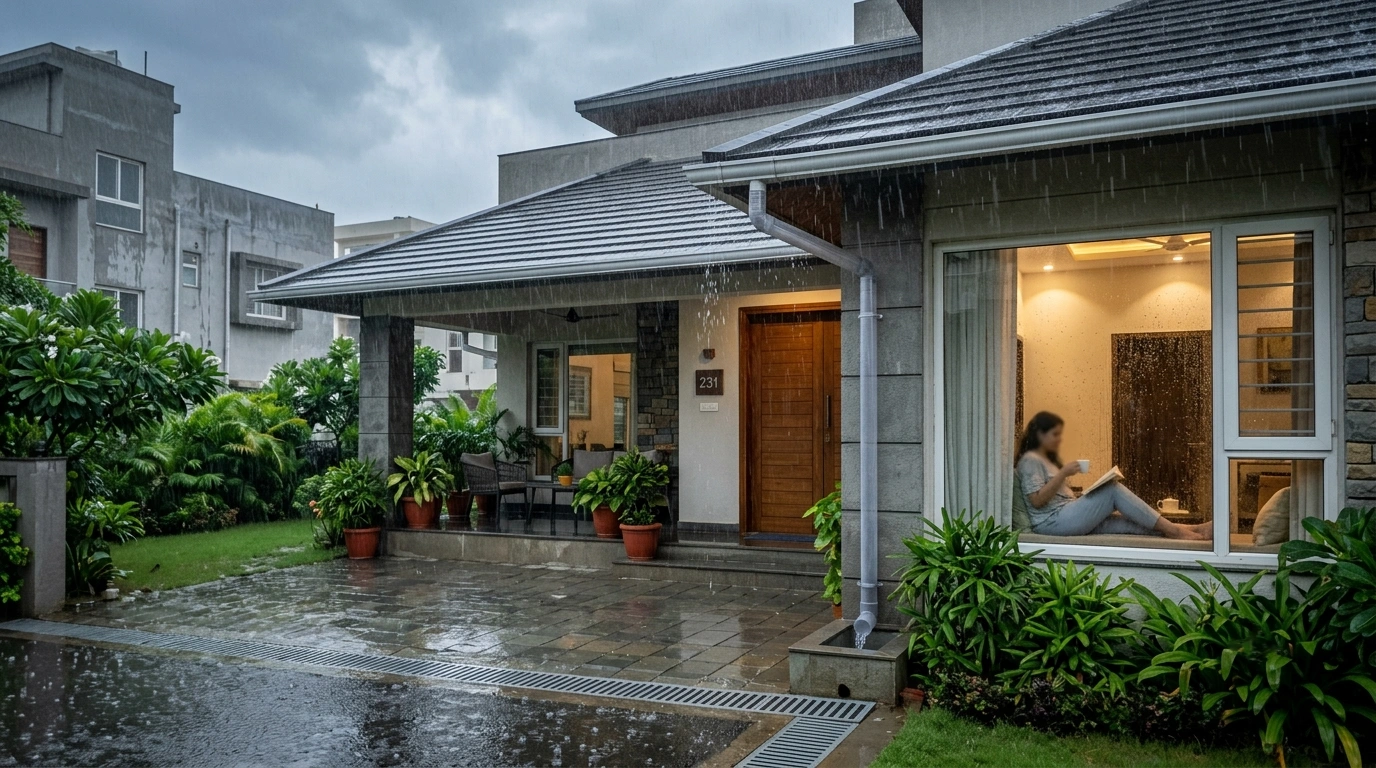
Monsoon weather is a test of your home’s ability to withstand it, right from the terraces to the walls, windows, electrical points and drainage system. For homeowners searching for practical Monsoon-Proofing Your Zirakpur Home solutions, preparation should begin before heavy rainfall arrives. A home in Zirakpur will certainly require some planning and can definitely gain from waterproofing, a proper drainage system, ventilation, moisture control and good interior materials. A well-prepared home not only prevents leakage but is also healthier and maintenance friendly.
This guide provides practical monsoon home maintenance so that you can find vulnerable areas, prevent water damage and make a comfortable home throughout the wet season.
Why Your Zirakpur Home Needs Monsoon Proofing?
Effective Monsoon-Proofing Your Zirakpur home begins with identifying all possible entry points for rainwater in the home. Some of these entry points are the flat roofs, the joints of the terraces, parapet walls, balcony edges, window frames, openings of pipe systems and external walls. Even small cracks can allow moisture to travel beneath paint or plaster. This causes damp patches, peeling finishes, mould or concrete deterioration.
The process should start with a visual inspection before the onset of the monsoon season. It entails looking out for any cracks, tiles that are loose, blocked outlets, sealant damage and stains around the ceiling and windows. The Central Public Works Department has recommended checking roofs, rainwater pipes, drains, plinth protection and related areas for monsoon preparation.
How Does Monsoon-Proofing Your Zirakpur Home Work?
Inspect and Waterproof the Terrace
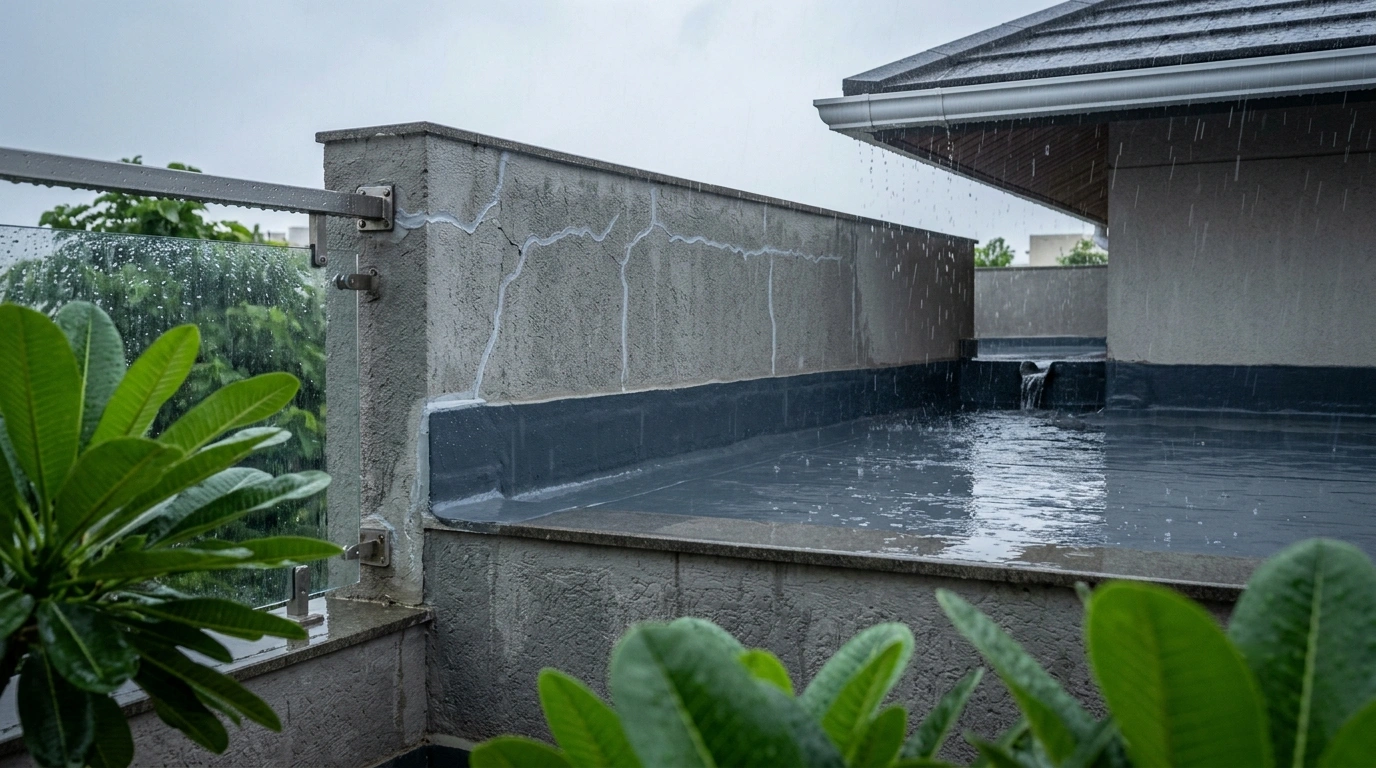
Your terrace is the first line of defence for your house from any rainfall. Test if there is water pooling on the terrace or if water drains out quickly after any rainfall. The pooled water may reveal any weakness in the joints and contribute to its rapid degradation.
Any professional terrace waterproofing must concentrate not only on any staining but also on the cracks, joints, drainage areas, parapet and penetrations. CPWD guidelines indicate many waterproofing systems, including membrane-based systems.
Avoid going for waterproofing materials just because they are cheap. Have a qualified expert assess where the leak is coming from and what is appropriate. Make sure that after doing repairs, the outlets are accessible.
Strengthen Walls, Windows, and Balconies
Exterior walls are vulnerable to moisture penetration through cracking, porous surface finishes and broken joints. Check the condition of wall surfaces for cracking, peeling paint, algae presence or moisture. Additional coatings and sealants can help in protecting these surfaces from moisture penetration, but first repair any cracked walls.
Windows should be accorded the same level of consideration. Ensure that silicone or weather stripping seals between windows and frames are intact. Maintain cleanliness of balcony drains and inspect tile joints frequently. Never route indoor air conditioning drainage into walls or balconies.
In case of extensive construction or renovation, the appropriate building codes should be referred to. According to the Bureau of Indian Standards, the National Building Code is a complete framework relating to building, materials, structure, plumbing and other services.
Protect Interiors From Humidity
Humidity management plays an essential role in monsoon house upkeep. Excess humidity may cause rooms to become congested and create mould growth in corners, walls, wardrobes and fabrics that lack good ventilation.
Ensure improved cross-ventilation when the exterior conditions allow it. Use exhaust fans in your kitchen and bathroom and do not leave wet clothes in poorly ventilated rooms. Maintain an adequate gap between wardrobes and the exterior wall.
Appropriate finishing material should be moisture-resistant, if necessary, in the case of bedrooms and living spaces. Paints that can be easily cleaned can facilitate maintenance, whereas laminates and humid-proof materials can minimise maintenance requirements. But no indoor material can remedy structural leaks.
Maintain Drainage Before Heavy Rain
Blocked drainage is among the easiest preventable causes for accumulation of water. Cleaning up of terrace outlets, drainage of balconies, rainwater pipelines, gullies and surrounding channels before the monsoon season is recommended. The cleaning can prevent obstruction to drainage.
Inspect whether rainwater from downpipes is directed properly away from walls and entrances that may be at risk. Where there is a basement or other low-level area, inspect pumps, sumps and drainage prior to periods of heavy rainfall.
CPWD also mentions drainage, plinth protection and proper arrangements for collecting and draining water.
Make Electrical Areas Safer
Electricity and water do not go well together. Check outdoor sockets, switches, extension points and any other electrical equipment to see if they are wet or damaged. Do not come into contact with the electrical equipment if your hands are wet.
Ensure that a certified electrician assesses any suspect installations and checks that protective devices are correctly fitted. Avoid keeping appliances and cables near places where water can accumulate. In case water reaches the electrical panel or sockets, turn off the power supply, if you can do so safely and seek assistance from a professional.
Choose Monsoon-Friendly Interior Materials
A resilient home interior design in Zirakpur needs careful planning. The interior design must not only be attractive but easy to maintain and resistant to swelling or staining.
Use waterproofing under finishes, surfaces and sealed joints for kitchens and bathrooms. In case of furniture, consult your interior designer regarding moisture resistance before choosing any surface, laminate, fabric or finish.
In case you are renovating, the Zirakpur interior design resource at Design De Maison can be helpful in gaining insight about local interior design needs and material choices.
Prepare a Monsoon Maintenance Checklist for Practicality
Before monsoons arrive, check the terrace, parapet wall, balconies’ drain systems, exterior walls, windows, pipe connections and rainwater pipes. Drain the drainage channels and clear the roof of any debris. Test your pumps, if you have them. Do not wait for leakage to appear on your ceilings.
During rainfall, take note of where water collects and take photos of problem areas for professional assessment. Post-rainfall, inspect the ceilings, corners, wardrobe and windowsill areas for any dampness. Recording recurring issues helps you determine if it is due to waterproofing, plumbing, condensation or drainage.
Avoid any cosmetic repairs like repainting damp walls until you have found and corrected the moisture source.
Conclusion
Successful Monsoon-Proofing Your Zirakpur Home is all about prevention, inspection, waterproofing, drainage, moisture control and material selection. Begin by addressing the envelope, followed by interior issues and safety concerns. Above all, treat repeated leaks as a maintenance problem for the building, and not just an aesthetic issue. In case there is any structural intervention required, make sure that you seek professional assistance. With regular inspections before and during the monsoons, one will be able to minimise water damage, maintain interior finishes, create comfortable interiors and enjoy your Zirakpur home regardless of the weather.
FAQs
Q – What is the best first step for monsoon-proofing your Zirakpur home?
A – Have a thorough inspection done of your terrace, drainage, exterior walls, windows, balconies, and waterproofing points. Repair all leakages first before doing any aesthetic work.
Q – How often should terrace waterproofing be checked?
A – Inspect the terrace before every monsoon season and even after receiving heavy rains. The frequency of repair or renewal varies based on several factors like waterproofing system, surface condition, exposure and workmanship.
Q – How can I reduce humidity indoors during monsoon?
A – Ensure proper ventilation, make use of exhaust fans in bathrooms and kitchens, refrain from hanging excessive clothes inside the house and ensure circulation around wardrobes and exterior walls.
Q – Does monsoon-proofing your Zirakpur home require an Interior Designer?
A – Not necessarily. For waterproofing and any structural issues, you need a technical professional. When it comes to choosing moisture-resistant finishes, furniture, layouts and materials, an interior designer comes into play.
Q – When should professional waterproofing be considered?
A – The services of professionals should be sought whenever there is recurrence of leaking, dampness spreading, plaster damage, widening of cracks or water is seeping into the building from its joints.
 Home
Home Portfolio
 Call Us
 Whatsapp
 Contact Us
 Call Us
 Whatsapp