
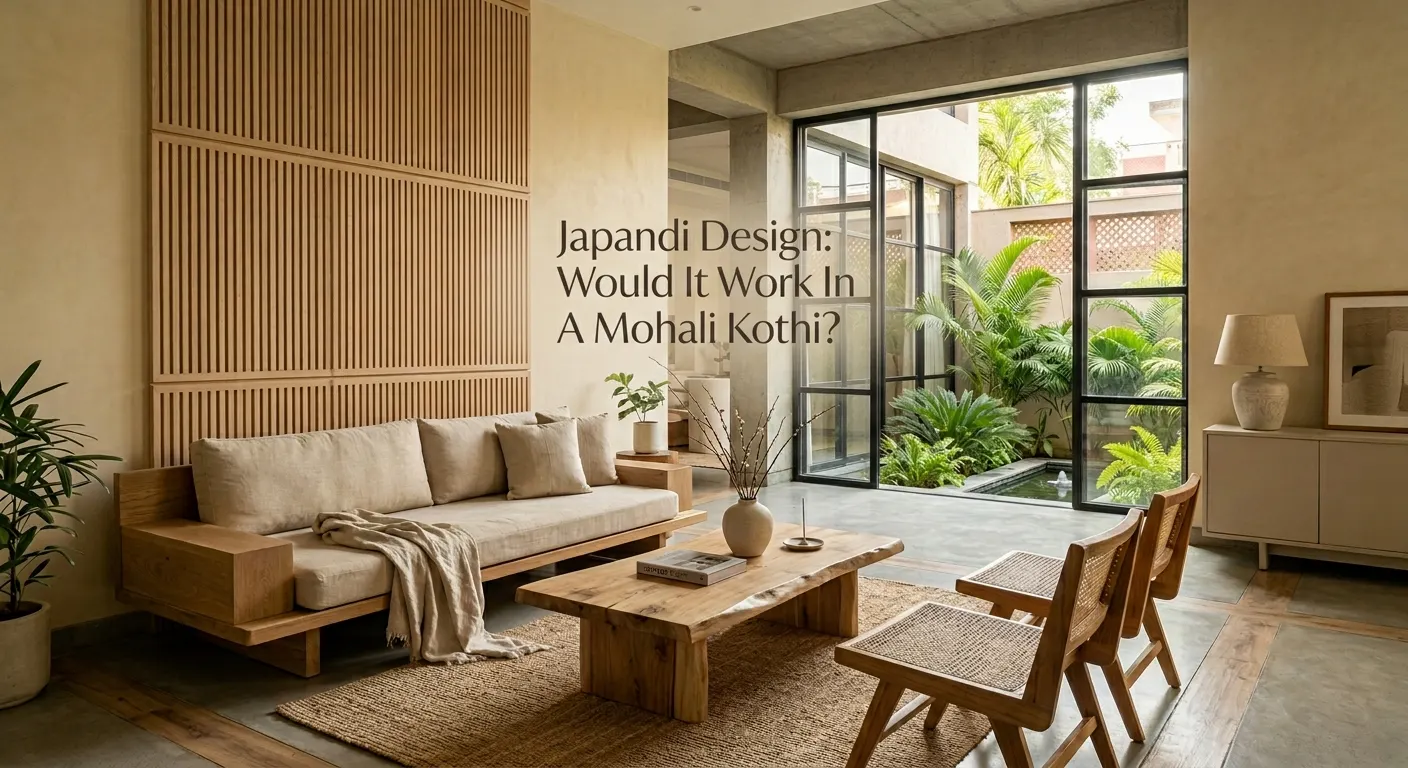
You’ve probably already seen it on your socials – rooms with seemingly impossible peace, wooden furniture, linens in cushions, and a simple ceramic vase telling the whole story. This is the Japandi design, which happens to be one of the top interior trends of the decade. However, there is one thing that many homeowners in the Tricity region have been pondering about. Could this minimalist style actually fit in a grand and family-filled Mohali Kothi? The honest answer is yes and it might work even better than you may have thought. Japandi interior design in Mohali is fast becoming a preferred choice for homeowners who want calm, functional and modern living spaces.
What Is Japandi Interior Design, Really?
The combination of two seemingly different design styles results in what is called Japandi interior design. The Japanese philosophy incorporates wabi-sabi, which refers to embracing the beauty of imperfection and nature in their pure forms, along with a Zen approach of minimalism and openness. The Scandinavian design emphasizes warmth, practicality and hygge. This is a Danish idea to make a home feel genuinely cosy and liveable.
Collectively, they create environments that are tranquil but not stark, minimal but not barren. The hallmarks of such spaces include: an earthy and neutral color scheme (with warm whites, beiges, muted greens, and clay), natural materials over man-made materials, sleek furniture that does not contain a single extra piece, layered lighting, and discreet storage options.
It was listed among the top trends in 2024 by Architectural Digest. This is not just a trend that will pass; rather, it is a design approach that appears to be quite sustainable. This is because it genuinely makes the home feel better to live in.
Why Japandi Interior Design Works Perfectly for Mohali Kothis
What you need to know is that a kothi in Mohali gives you something that most Western apartments will never be able to offer you. For example, high ceilings give you that open spacious feel that Japanese design loves so much. Big windows provide ample sunlight, something that cannot be done without in this particular style of architecture. The presence of a garden or a sit-out means biophilic design extends beyond your walls. With multiple rooms, you’re giving each space a purpose of its own.
Compared to a small apartment in the city, where each square meter of space has to be squeezed out of the design, the kothi design definitely wins hands down. It’s working with the design, not against it.
Colour tip: For summer months when temperatures can hit an astounding 42 degrees in Mohali, the choice of Japandi colors like warm white and stone grey not only gives an aesthetically pleasing effect but a physically soothing one too. So this is a practical win and a design win at the same time here.
This makes Japandi interior design perfect for spacious homes in not just Mohali, but also in Chandigarh, as well as Panchkula.
Best Japandi Materials for Indian Homes and Mohali Kothis
While all other trends associated with minimalist interior design seem perfect in theory on a London-based mood board, most of them are not workable in practice in India. However, the Japandi trend is one of the exceptions; its basic material items are either indigenous or readily available in India. You’ll find them here at far better prices if we compare them to imported alternatives.
- Sheesham & teak wood – furniture, flooring and feature walls
- Cane & bamboo – Chairs, room dividers and pendant lamp shades
- Handloom cotton & linen – upholstery, curtains and cushion covers
- Kota stone & sandstone – flooring, bathroom and surfaces
- Terracotta & handmade ceramics – decor, planters and accent lighting
- Indoor plants – This is non negotiable for any biophilic approach
Can Japandi Interior Design Work for Indian Joint Families?
The typical kothis in Mohali are not the abode of the minimalist couple who own only three plants. Instead, these homes are occupied by extended families, complete with grandparents, children, visitors during weekends, and Diwali decorations that come back every October. Can this design withstand the test of time?
That it does – if you think about it. Spaces designed in Japandi style appear to be clutter-free since all the clutter is kept out of sight, not because the spaces lack clutter. The magic lies in floor-to-ceiling wardrobes with matte finish, TVs housed in cabinets, under-the-stair storage, and kitchen islands with drawers.
A residential interior designer in Chandigarh or Mohali will be designing for your real-life family – not some Instagram fantasy of one. This means using practical material which can withstand everyday wear and tear, cleaning surfaces which can survive a summer in northern India, and proper storage facilities. You can trust experienced interior designers in Mohali and Chandigarh. They understand how to mix Japandi aesthetics with practical Indian living needs.
How to Create a Japandi-Style Mohali Kothi Without Losing Indian Character?
Yes, and kothi offers you more than almost any other house style. The most important thing is to regard the philosophy of Japandi design and not treat it like a set of instructions. Adopt the aspects of it which appeal to you, such as the muted colour scheme, the use of authentic natural elements, and lack of clutter on surfaces. Embrace your Indian culture by incorporating handmade fabrics, local earthenware, and an Indian garden bursting with life.
And it’s definitely not a replication of an apartment in Tokyo. It’s a modern kothi interior that can breathe, purposeful, open, and true to its location. This is how good interior design in the Tricity should look like. Honestly speaking, this is how it should always have been. You can definitely explore our modern interior design projects in Mohali and the tricity region if you want more ideas.
Bring This Look to Your Mohali Home
Design De Maison specialises in modern residential interiors across Mohali, Chandigarh as well as Panchkula. So let’s talk about it.
Looking for Japandi interior design in Mohali or Chandigarh? Then don’t forget to contact Design De Maison for a personalised consultation. We can actually transform your whole kothi and turn it into a calm and modern living space.
Conclusion
Japandi interior design in Mohali isn’t just a passing trend. It’s actually an effective and ageless way of achieving harmony in your living space. This is made possible by taking into account the vast space available, the presence of plenty of natural light, and easy availability of local materials. Homeowners in Mohali, Chandigarh and Panchkula are looking to adopt this unique style.
You can make it work perfectly for Indian living and all you have to do is mix Japanese minimalist design with a touch of Scandinavian coziness to adapt it to Indian living. The Japandi style has the right balance between aesthetic appeal and practical usability. From a joint-family household to a minimalistic lifestyle, this design style is easily adaptable to suit individual requirements while retaining the essence of comfort and culture.
Frequently Asked Questions
Question: What is Japandi interior design?
A – It is an interior style which fuses traditional Japanese elements of simplicity (wabi-sabi, zen philosophy) with comfort and functionality found in Scandinavian style (hygge). The outcome is an interior which looks tranquil, minimalist and purposeful.
Question: Can Japandi design work in an Indian home?
A – Yes. There are some elements like sheesham wood, cane, cotton, terracotta and stone which you can source from within India. The aesthetics actually fit very well in spacious kothis that are filled with ample natural lighting. This is complemented by the use of some traditional Indian elements which don’t contradict the minimalist approach.
Question: What colours work in a Japandi-style Mohali kothi?
A – Japandi color scheme comprises of warm whites, beige, grey, taupe, clay, and sage green colors. Since this is a hot climate area in Mohali, using cool neutral colors will also help in making rooms look refreshing and serene.
Question: Is Japandi design expensive to execute in India?
A – This is not always the case. The concept of spending less but getting more could result in lower costs. There are a lot of materials like cane, cotton, terracotta and even locally-sourced stones which aren’t really expensive at all. A good interior designer in Mohali will help you get high-quality materials at low prices.
Question: How do I get a Japandi-style interior in Mohali?
A – Design De Maison is one of the best interior design companies operating in Mohali, Chandigarh and Panchkula. We offer modern home interiors design which include minimalistic and Japandi-style interiors for kothis in the Tricity area.
 Home
Home Portfolio
 Call Us
 Whatsapp
 Contact Us
 Call Us
 Whatsapp