
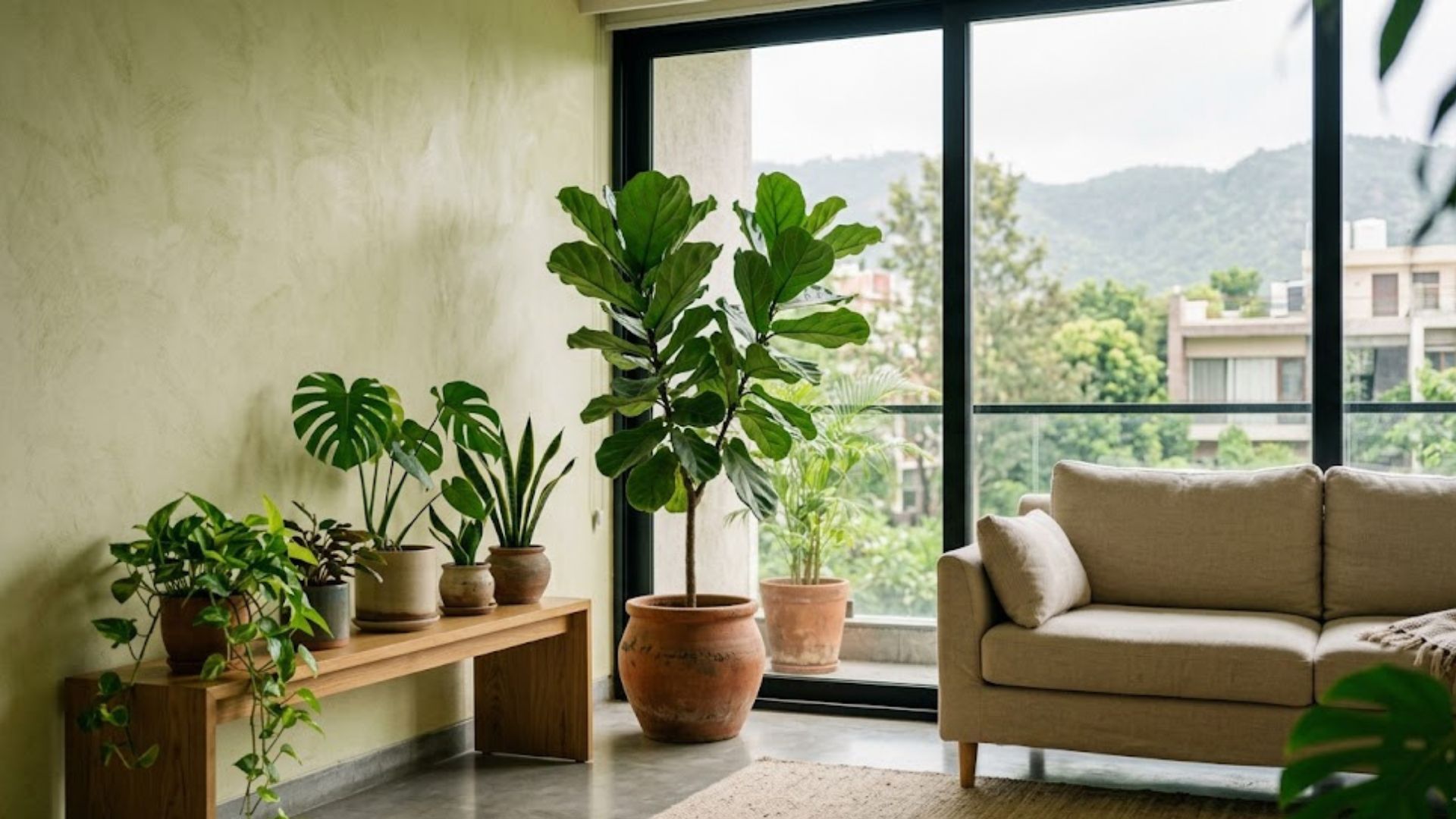
Imagine you enter your apartment in Mohali after a gruelling day, dodging the city traffic jams of Tricity to return to bare concrete and staled air-conditioned surroundings. But this time, you step into a living space transformed by soft green textures, dappled sunlight and the subtle earthiness of the foliage within. Your shoulders relax, your breathing slows and you breathe out, releasing all that pent-up tension.
Forget about a vacation resort or a design magazine-this is biophilic design, and it is something every resident of Tricity can and should integrate in their homes. Biophilic design is all about incorporating the natural world, whether through plants, materials, light or even just organic forms into your indoor environment.
In a region like Tricity where urban expansion in Chandigarh, Mohali and Panchkula, the building of high-rises is consuming green space faster than the authorities can approve construction projects and green areas are giving way to glass and steel behemoths, incorporating nature inside our homes isn’t a choice, it’s a need that is critical to our well-being and our overall sustainability.
What Exactly Is Biophilic Design?
Biophilia as a concept was made popular by E.O. Wilson, a famous American biologist. He suggested that it is within the fundamental genetic makeup of humans to connect with other living organisms and with natural systems. Biophilic design takes this instinct to a practical level of architecture and interior design for room, creating homes that are designed with nature so it isn’t just cosmetic but integrated into every aspect of its form, feeling, and function.
A simple act like putting a fiddle leaf fig in a corner of your apartment is a way of incorporating biophilic design principles, whereas the extreme level of its implementation can involve wall gardens in large atriums that allow cascading greenery and light to flow from double-height lobbies, skylights that capture the movement of the sun through the day or the introduction of indoor water features to mimic the sound of rain or streams indoors.
In fact, for the majority of Tricity residents, the cheapest, most straightforward and most effective starting point is interior plants- and the scientific proof of their benefit is extremely persuasive.
This Tricity Urban Problem Plants Can Solve
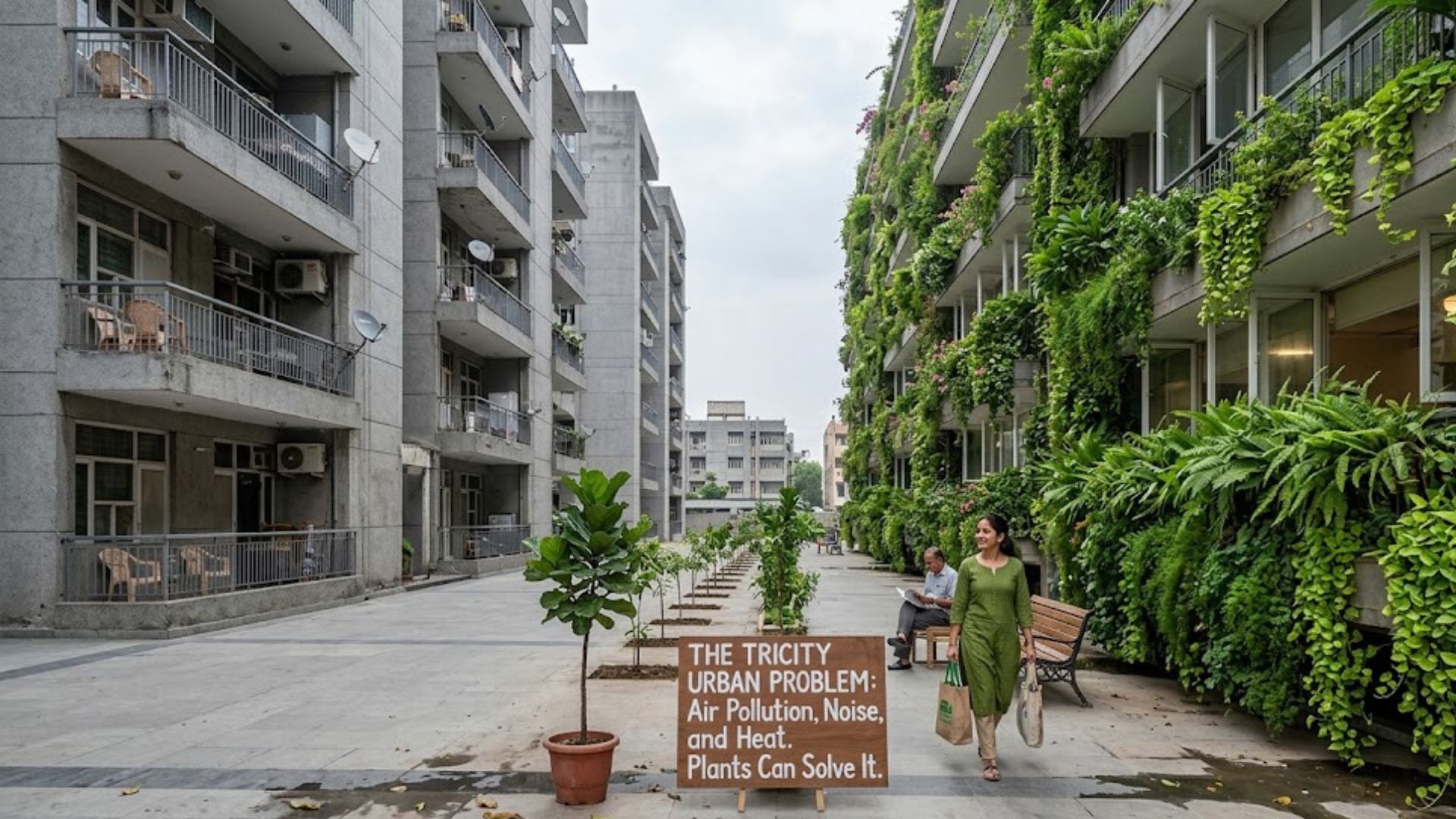
While Chandigarh is often praised as India’s greenest and most planned city, Mohali and Panchkula, and newer sectors of Chandigarh, are experiencing unprecedented growth with overwhelming pressure on existing green spaces.
High density residential complexes, expansive arterial roads and commercial spaces, ensure that many Tricity residents now live in apartments with minimal outdoor access, very poor ventilation and even less greenery. Coupled with extreme weather, with summers burning up to 45C and winter fogs often blanketing the entire region for months at a stretch, this has made residents virtually prisoners indoors for long periods of the year.
This lack of connection with nature is proving to be detrimental, as studies confirm it leads to increased stress, reduced focus, and weakened immune systems. Indoor plants are more than just aesthetics; they are a direct solution.
Proven Benefits Of Indoor Plants For The Tricity
Bringing plants into your Tricity home comes with numerous evidence-based benefits:
- Improves Air Quality-The landmark NASA Clean Air Study found that specific houseplants like snake plants, peace lily and golden pothos can absorb several toxins, such as formaldehyde and benzene, which off-gas from synthetic furniture, paints and construction materials that are increasingly prevalent in newer Tricity buildings.
- Reduces Stress levels-An interaction with indoor plants has been scientifically shown to decrease stress levels both physiologically and psychologically by lowering blood cortisol-a benefit to professionals stuck behind IT sector deadlines or facing traffic jams on NH-5.
- Boosts productivity and focus-Workplace productivity levels have been found to increase by a significant 15% when an office environment is enriched with plants-something every work-from-home professional in a Tricity flat or a struggling student would readily benefit from with a few strategically placed plants.
- Elevates humidity levels-As part of a natural process called transpiration, plants release moisture into the air. The arid winters of the Tricity can cause very low indoor humidity levels that contribute to discomfort; indoor plants serve as natural humidifiers easing breathing problems and dry skin.
- Improves sleep quality-Specific plants such as lavender, jasmine and aloe Vera can enhance sleep quality – something very crucial given the urban noise and light pollution in most Tricity residences.
Best Indoor Plants For Tricity And Climate
Not all plants do best in any home. The climate of Tricity – dry and hot summers, cold and foggy winters, and moderate monsoon humidity – will require a bit of thoughtful plant choice:
- Snake Plant (Sansevieria): Practically indestructible, requires little light and minimal watering. These can work perfectly in Tricity flats, particularly with minimal window space.
- Golden Pothos: An effective air purifier that thrives in low light and tolerates inconsistent watering – ideal for a busy working family.
- Areca Palm: Creates an air of tropical resort calm in any living room while also helping to humidify dry winter and summer AC environments.
- Peace Lily: Thrives in a low-light bathroom or bedroom. Has delicate white blooms and also has strong air purifying properties.
- ZZ Plant (Zamioculcas): Drought tolerant and practically no-maintenance. Ideal for Tricity apartments when you are going away on summer holidays and may not water for weeks.
- Tulsi (Holy Basil): The plant rooted in tradition and in so many Tricity homes, Tulsi not only has practical medical and air purifying benefits but it also reconnects your modern home to a traditional practice.
How To Bring Biophilic Design To Your Tricity Home?
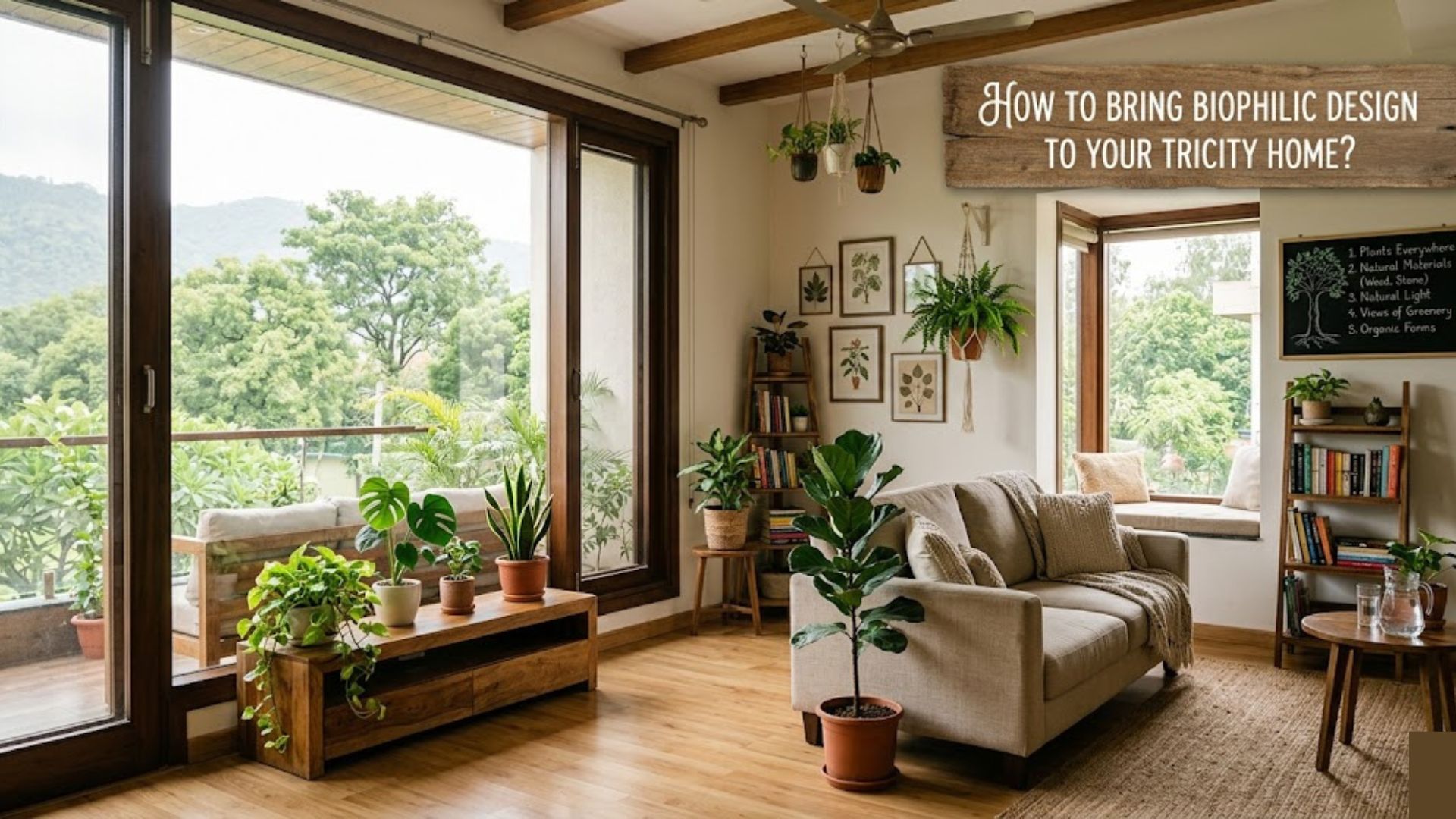
A Biophilic design scheme does not require a large, spacious home. The methods will work at any scale of home, whether you’re living in a two-bed in Sector 70, Mohali, a penthouse apartment in Zirakpur, or a government quarters in old Chandigarh sectors.
Windowsills and balconies are your first choice: Use east-facing windowsills, to get mild morning sunlight, for pots of herbs, succulents, or small ferns. Almost all Tricity flats will have some space in the balcony for at least some vegetables and flowers at an appropriate time of year.
Vertical green walls: In cramped apartments, plant panels fixed to a wall can achieve space-saving results and maximise green life, a sensible choice in the small 1BHK and studio flats found in Aerocity and Mohali.
Centre the space with statement plants: a single, tall fiddle leaf fig or a bird of paradise in a terracotta pot can instantly transform any living space and be a central natural focal point no furniture could ever hope to replicate.
Layer in natural elements: biophilic design is not just about plant life-using stone surfaces, timber, jute rugs, bamboo blinds will create a natural, cohesive look and feel to complement the Corbusier-inspired architecture of Chandigarh.
Building A Greener Tricity, One Home At A Time
The original intention of Le Corbusier was to create a city where nature and people lived together and open spaces were used creatively. At the present pace of building in Tricity this will be a concept long lost to density and urban sprawl.
Biophilic design in our homes is about trying to reclaim that space not through the planning departments but in the smallest of personal spaces where we eat, sleep, raise children and find respite. When many of us begin to make that change in our homes in Tricity, this will cascade to the wider community and then the designers and builders responsible for our homes will eventually follow suit.
A city that values its nature indoors, will naturally want to protect its outdoors as well.
Conclusion
Indoor plants are by far the least expensive, most documented and beautiful additions to any home in Tricity. They purify our air, reduce our stress after a long day at work, improve our productivity, and give life to our interiors.
DESIGN DE MAISON suggest that biophilic design is not just an affluent concept restricted to posh abodes-it is a fundamental human need that our fast-paced urban life in Tricity renders more critical than ever before. Start with just one snake plant on the shelf, one pothos that trails from the bookshelf, or one tulsi that sits on your kitchen windowsill. Observe the impact a single living thing can have on a space-and on the sense of being home.
FAQs
Which indoor plants survive best in Tricity’s harsh summers?
Snake plants, zz plants and money plants are some of the plants that can thrive in the extreme summer heat of Chandigarh and Mohali. Minimal watering is needed, these survive air-conditioners and need little attention during the hottest of the 45°C months.
Do indoor plants really improve air quality at home?
Yes, NASA’s clean air study verified that plants such as pothos, peace lilies and snake plants filter harmful vocs like formaldehyde and benzene, which are released by the paints, furnishings, adhesives in the newly constructed tricity apartments.
How many plants do I need for noticeable benefits?
According to studies, one medium sized plant for 100 sq ft is adequate for a significant change in air quality and mood. Three to five plants will be suitable for a typical tricity 2BHK apartment, placing them in the living room and bedroom will have a noticeable effect.
Can biophilic design work in small apartments without balconies?
Yes, vertical green walls, hanging planters, windowsill herbs, or table top succulents can all be integrated into compact studios and 1bhk apartments in Mohali or Zirakpur with no requirement for outdoor space.
How do plants help during Tricity’s foggy, dry winters?
Plants release water vapour through transpiration, adding natural moisture to air that would otherwise have been robbed by room heaters. This soothes dry skin, nasal passages and respiratory problems making the air noticeably comfortable during the foggy and cold winter days in the Tricity.
What’s the easiest way to start with biophilic design at home?
Start small by placing just one low-maintenance plant such as a pothos or snake plant on a shelf or windowsill and gradually add natural elements such as jute, wood and stone to create a living space that connects with nature.
 Home
Home Portfolio
 Call Us
 Whatsapp
 Contact Us
 Call Us
 Whatsapp