
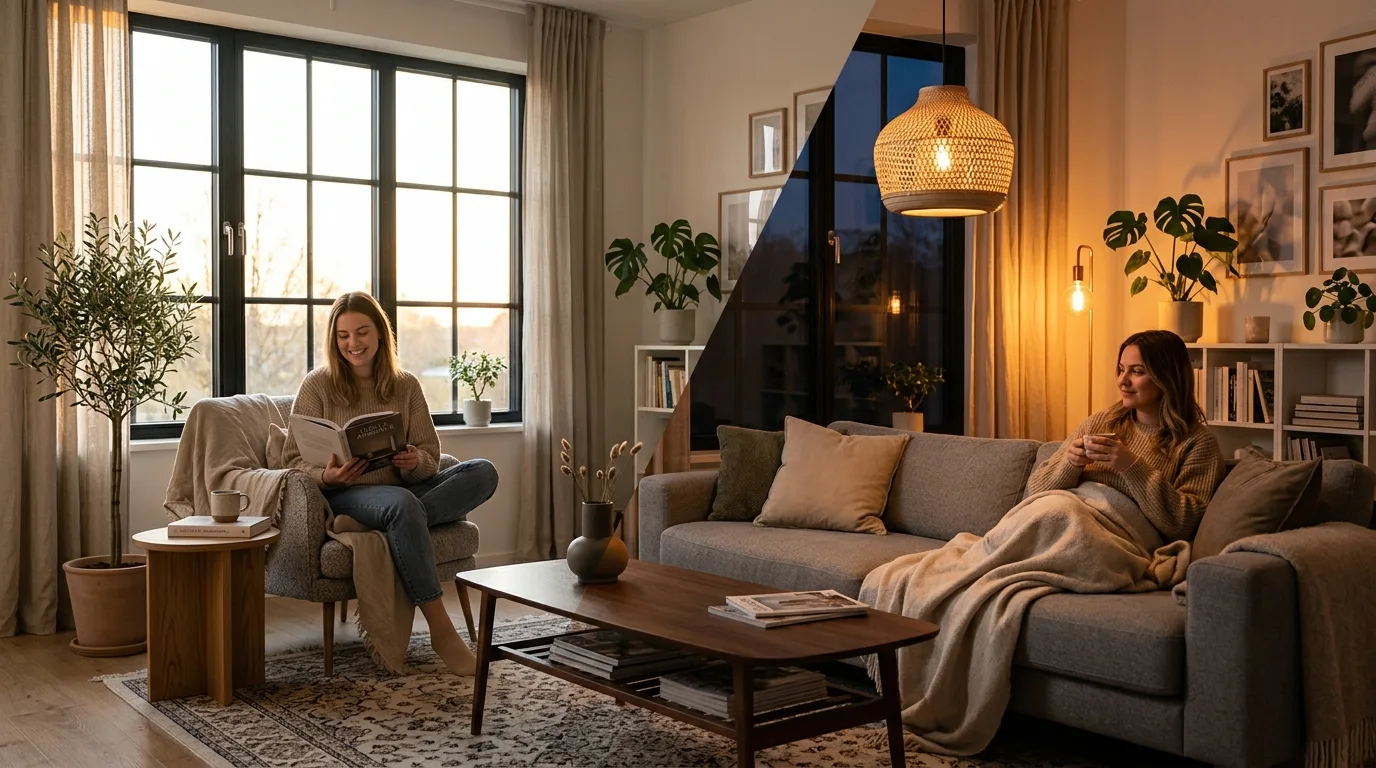
If you walk into a room that’s been lit with harsh white light, then again enter when the lighting has a soft amber glow, the difference will shock you. It feels like two spaces that are entirely different all because of the lighting itself. Now even though nothing else has changed, you can see it. This isn’t your imagination but actually what the psychology of light is all about. This is one of the most well-documented and underused tools in interior design. So if you’re planning a renovation or even trying to build a new home, it’s important that you understand how light changes a room’ mood. A decision like this matters just as much as choosing furniture or paint colour.
At Design De Maison, we actually treat lighting design as a core part of every project. The right light does a lot more than just illuminate your room. This shapes how people feel in it.
Why Light Affects Mood More Than You Think?
Light is one of the most potent controllers of the circadian rhythm of human beings. Apart from the function of helping us see, it is a constant source of information for our brains regarding when we need to sleep and produce hormones and how our moods and cognitive functions operate. This is the basis of something known as the psychology of light within interior design. This is an idea that colour, intensity and timing of light explore shapes our emotional and physiological state in real time.
The effect of cool, blue light is to trigger the activity of photoreceptors in the eye that inhibit the production of melatonin, the chemical that tells the body it is time to sleep, and thus cool lighting is especially useful during early mornings and daytime when alertness is sought.
Understanding Colour Temperature
Before you can control light to create a specific atmosphere, it will be useful to get an insight into color temperature, which is measured in Kelvins. The lower number of Kelvins represents warmer light that is slightly amber in tone, while a higher number indicates a cooler tone with more blue in the light, akin to daylight. Warm light vs. Cool light is probably the most functional idea in lighting design since all other decisions depend on this principle.
The light temperature of 2700K to 3000K produces warmth that ensures comfort and ease of use, hence appropriate for living rooms, bedrooms, and dinning rooms. This is because comfort and relaxation are the key attributes of such areas. On the other hand, a higher light temperature between 4000K to 6000K ensures clarity and alertness; hence appropriate for offices and kitchens.
How Different Types of Lighting Influence Mood?
Beyond temperature, different lighting styles affect how light really changes a room’s mood.
Warm lighting:
- Encourages relaxation
- Creates intimacy
- Supports evening routines
Cool lighting:
- Boosts alertness
- Improves concentration
- Enhances visibility
Accent and coloured lighting can add depth but this should actually be used very carefully. A good lighting design uses these elements very subtly which is to enhance ambiance without overwhelming the space.
How Light Changes a Room’s Mood: A Room-by-Room Approach
One way you can know how light affects a room’s atmosphere is by creating lighting schemes based on the function of the room.
Living Rooms
This is where warm and layered lighting works the best. You need to combine ambient lighting with floor lamps and accent lighting here. This makes a comfortable and social environment.
Bedrooms
This is where soft, warm and dimmable lighting is very essential. This is what supports your body’s natural wind down process and also improves the sleep quality.
Kitchens and Home Offices
A cooler and brighter lighting is more suitable here. Task lighting in these areas is known to enhance focus and reduce eye strain here. This makes it essential for productivity.
Dining Areas
Warm lighting can help make a welcoming atmosphere. You have to use dimmers which allow for more flexibility between casual meals and intimate settings.
Bathrooms
You need to work with a balanced approach here which works the best. Try cooler lighting for mirror and grooming tasks. This works the best with softer ambient lighting to maintain comfort.
The Role of Natural Light in How Light Changes a Room’s Mood
Natural light contributes significantly to the way in which lighting affects the mood in a space. It increases well-being, spatial awareness, and openness of interior spaces.
Spaces lacking in natural light can employ multi-layered lighting design that is reminiscent of daylight when the sun is up, and more warm-toned once the sun has set. The latter effect is easily achieved by modern LED lighting systems that allow for dimming and changing hues.
Common Lighting Mistakes That Disrupt Mood
Even the most aesthetically pleasing designs can go wrong if proper attention is not paid to lighting design.
Single Overhead Lighting
The use of a single bright light makes the space seem two-dimensional without any depth. Layered lighting requires combining ambient, task, and accent lighting.
Uniform Lighting Across Rooms
Designers tend to overlook that each room has its own purpose. Uniform colour temperature across rooms diminishes the effectiveness of lighting.
No Dimmers
Dimmers provide flexibility and mood lighting and allow one room to perform different functions at various times during the day.
Bringing Lighting Psychology Into Your Home
You don’t need a complete redesign to apply the principles of how a light affects a room’s mood. All you need are some thoughtful choices.
- Use warm lighting where relaxation matters
- Use cooler lighting where focus is needed
- Layer different light sources
- Install dimmers for flexibility
Interior designers in Chandigarh, Mohali, Panchkula, or Zirakpur must make sure that their lighting plans for their houses come first and do not wait till the end.
We at Design De Maison incorporate lighting in the beginning to give a purposeful design to all our spaces.
Conclusion
Understanding how light changes a room’s mood has the ability to change the entire feeling of a house without even altering the physical architecture and furnishings within. Light is enough to affect the comfort, productivity, and emotional in such a way that it’s powerful.
Through proper combinations of color temperatures, layering of lights, and placing them strategically, people would be able to create rooms that change according to their requirements. Through strategic usage of lighting in homes, light turns out to be one of the most significant aspects of your room.
Frequently Asked Questions
Q1. What colour temperature is best for a living room?
A – Warm lighting in the 2700K to 3000K range is perfect because this promotes relaxation and social interaction.
Q2. Why should bedrooms avoid cool lighting?
A – Cool light is what suppresses melatonin which makes it harder for the body to relax and then fall asleep.
Q3. What lighting works best for kitchens and home offices?
A – Cooler lighting of 4000k to 5000k is best for focus, visibility and reducing eye strain.
Q4. Is coloured lighting suitable for home interiors?
A – This works best as an accent so overuse can affect the balance and mood of a space.
Q5. What is layered lighting?
A – This combines ambient, task and accent lighting which makes flexibility and depth within a room.
Q6. Are dimmer switches important?
A – Yes they actually allow you to adjust brightness and mood throughout the day.
Q7. When should lighting be planned in a renovation?
A – Lighting has to be planned early side by side layout and electrical design.
 Home
Home Portfolio
 Call Us
 Whatsapp
 Contact Us
 Call Us
 Whatsapp